QuickBooks-Company-File-Not-Found

Not being able to locate or open your QuickBooks company file doesn’t always mean the file is lost, but it does indicate that QuickBooks is unable to access it at its current location, which can put your data at risk if not resolved quickly.

Whether you’re working on a local system or in a multi-user network, you may encounter the QuickBooks company file not found error when trying to open your company file. This usually appears with a warning that the file cannot be located or accessed.

This error can occur due to issues like network problems, changes in file location or format, or permission restrictions. In this guide, we’ll look at what the error means, why it happens, and how to fix it step by step depending on whether you are hosting the company file or not.

What Does the QuickBooks Company File Not Found Error Mean in QB Desktop?

In QuickBooks Desktop, the “Company File Not Found” error appears when the software is unable to locate or open your company file (.QBW). This typically happens when the file has been moved, renamed, deleted, or stored in a different folder than QuickBooks expects. You may see a warning message such as:

Warning: “The company file you selected could not be found. You can try one of the following: Choose the ‘Open or Restore Company…’ command from the ‘File’ menu to look for this file in a different directory.” OR

“Use the ‘Search’ tool from the Windows Start Menu to locate it on your computer.”
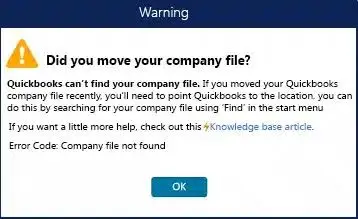
QuickBooks Company File Not Found

To resolve it, you may need to manually locate the file, restore it from a backup, or correct the file path so QuickBooks can properly access and open the company file.

Causes Behind QuickBooks ‘The Company File Could Not Be Found​’ Error

You may find a missing company file simply because it’s not added in the search results, or if the network connection is hampered. Here’s a list of all the possible reasons why QuickBooks company file not found:

  • Your system is not properly connected to the server over the network.
  • Network connection shows packet loss or slow response.
  • The required company file is not appearing in the search results.
  • Your company file is not opening due to incorrect selection of file options.
  • The backup file (.QBB) is not restored using the correct restore option.
  • The Accountant’s Copy transfer file (.QBX) is not converted properly in QuickBooks.
  • Your company file is not saved or located correctly during the restore process.

Try This When Company File Is Missing or Cannot Be Found

You may notice or encounter the QuickBooks company file not found error​ when opening a company file over the network or locally on your computer. Below, we will discuss both cases and the corresponding troubleshooting solutions.

Proceed with the methods depending on how you are opening the data file:

Case 1: If you are accessing your QuickBooks file over the network

If you’re collaborating with your team on a multi-user network, follow the steps below to recover or repair the company file not found in QuickBooks Desktop.

1. Ping the server

    With these steps, you can verify that your computer has a good network connection on the cloud. Make sure to run this check on a client workstation to verify the connection:
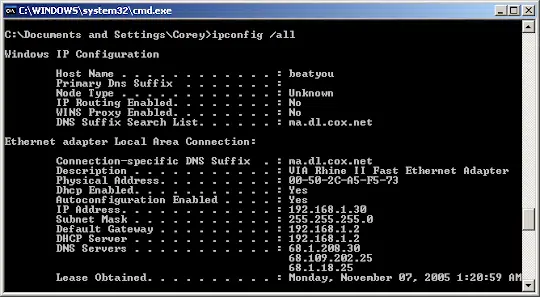

    • First, find the name of your server/hosting computer.
      • Press the Windows +R keys to open the Run command.
      • Type CMD in the Run field and click OK.
      • In the Command Prompt, type eipconfig /all, then press Enter.
    Ipconfig-all-command-Image.png
    • Note down the Host Name (servername).
    Ping-the-Server
    • Now, type ping [name of your server], then press Enter.
    • Check the results to see if every packet receives a reply.
      • If all packets respond successfully, your computer is connected to the network.
      • If you notice packet loss or unusually slow response times, your network may have connectivity issues. Consider contacting an IT professional for further assistance.

    If the network connection is working properly but the problem persists, continue with Solution 2.

    2. Search for all company files

      On your server computer, use the search bar to perform a wildcard search for all company files by entering one of the following search terms.

      Note: Make sure to place an asterisk (*) before the file extension so the search includes all matching company files.

      • *.qbw (Working Files)
      • *.qbb (Back Up Files)
      • *.qba (Accountants Copy Files)
      • *.qbx (Accountants Transfer Files)
      • *.qby (Accountants Change Files)

      If you find the company file, note its location and continue to Solution 3. If the file doesn’t appear in the search results, consider contacting an IT professional to help locate and restore it.

      3. Open your file in QuickBooks

        Open your company file using the appropriate option for your QuickBooks file type.
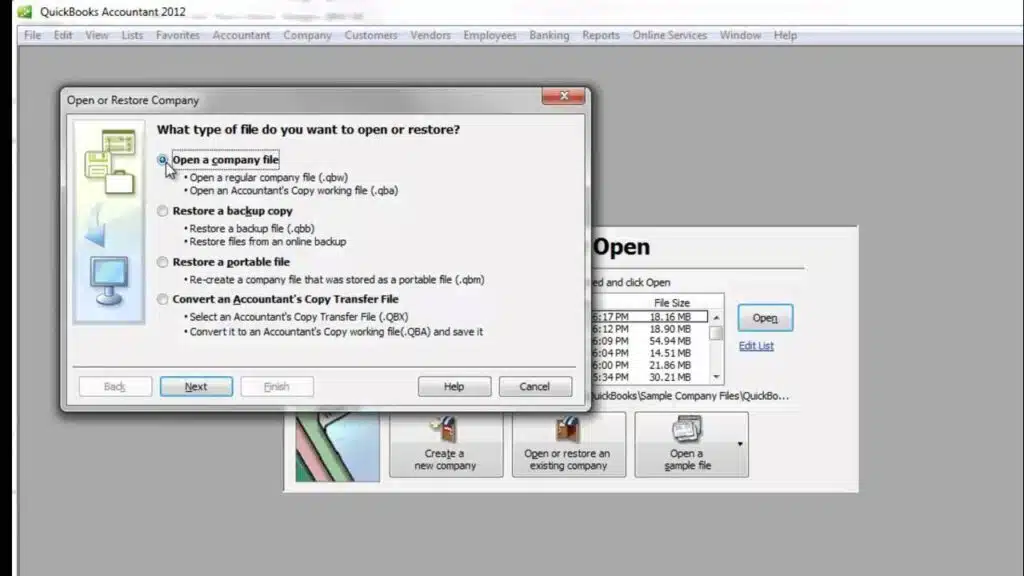
        • For a Company File (.QBW) or Accountant’s Copy (.QBA)
          • Open QuickBooks and go to File > Open or Restore Company.
          • Select Open a Company File, then click Next.
        • Browse to your .QBW or .QBA file.
        • Select the file and click Open.
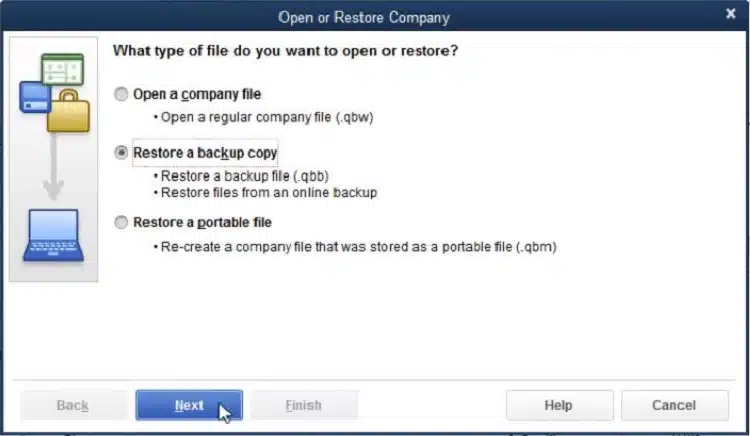
        • To Restore a Backup File (.QBB)
          • Go to File > Open or Restore Company.
        Open-or-restore-company
        • Choose Restore a Backup File, then click Next.
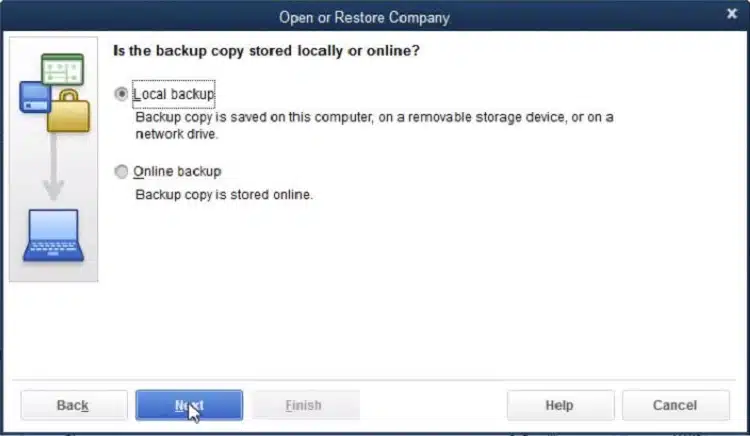
        • Select Local Backup.
        Select Local Backup
        • Browse to and select the .QBB backup file, then click Next.
        • Choose the folder where you want to restore the file and click Save.
        • To Restore an Accountant’s Copy Transfer File (.QBX)
          • Open File > Open or Restore Company.
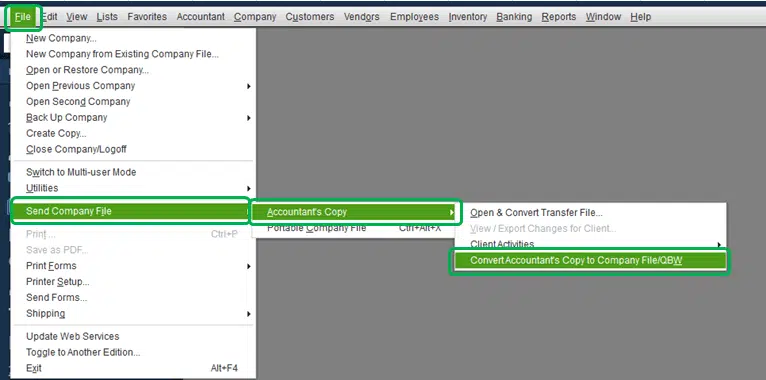
          • Select Convert an Accountant’s Copy Transfer File, then click Next.
        Convert an Accountant's Copy Transfer File
        • Click Next on the What the Accountant’s Copy Can and Can’t Do prompt.
        • Select the .QBX file and click Open.
        • Choose where you want to save the converted Accountant’s Copy file, then click Save.

        Case 2: If you are accessing your QuickBooks file saved locally on the same computer

        Are you getting the error message QuickBooks ‘the company file could not be found​’ when accessing a company file on the local computer?

        Following the methods below will help you locate and open your company file that is missing or cannot be found with each step:

        1. Search for all company files

        Go to your server computer and use the search bar to look for all QuickBooks company files using a wildcard search. Type any of the following:

        • *.qbw – Working files
        • *.qbb – Backup files
        • *.qba – Accountant’s copy files
        • *.qbx – Accountant’s transfer files
        • *.qby – Accountant’s change files

        Note: Make sure to include the asterisk (*) before the extension so the search picks up all related files.

        Once you find the file, note its location and move on to Solution 2.
        If you can’t find it, it’s best to get help from an IT professional to locate it.

        1. Open your file in QuickBooks

        Try opening your company file manually depending on the file type:

        • Opening a Company File (.QBW) or Accountant’s Copy (.QBA)
          • Go to the File menu and choose Open or Restore Company.
          • Select Open a Company File, then click Next.
          • Browse and select your company file.
          • Click Open to continue.
        • Restoring a Backup File (.QBB)
          • Select File at the top menu bar.
          • From the options, click on Open or Restore Company.
          • Now, choose Restore a Backup File > Next.
          • Select the Local backup option.
          • Choose your company file > Next.
          • Finally, locate where you wish to save the restored company file and click Save.
        • Restoring an Accountant’s Copy Transfer File (.QBX)
          • Go to File > Open or Restore Company.
        • Select Convert an Accountant’s Copy Transfer File, then click Next.
        • If prompted with the “What the Accountant’s Copy Can and Can’t Do” window, click Next.
        • Select the .QBX file and click Open.
        • Find the location where you wish to save the Accountant’s Copy File, then select Save.

        Conclusion

        QuickBooks company file not found is a common issue that can interrupt your access to important business data and prevent you from opening your company file. Above, we discussed the key reasons behind this error, including missing or moved files, network issues, and file path or permission-related problems.

        In case the methods didn’t work, or you require professional assistance, you must consult QuickBooks ProAdvisors. Dial +1(888)-718-7888 to talk to experts right away!

        Frequently Asked Questions (FAQ’s)

        Yes, the QuickBooks Database Server Manager directly affects your company files by allowing multiple users to access and work in them simultaneously over a network. It acts as the background host, managing the data traffic so different workstations can open the same file without data corruption.

        To resolve the error, first try locating the file manually via the Windows Start Menu or use the built-in QuickBooks File Doctor tool to repair path and connection issues.

        The QuickBooks company files use the .qbw file extension. This is the primary format used by QuickBooks Desktop to store your main account information, lists, and business data.

        To restore a QuickBooks Desktop backup file, open the program, go to the File menu, and select Open or Restore Company. Choose Restore a backup copy, select Local Backup, and browse your computer to locate your .qbb file. Save it to your desired folder to complete the restore. 

        QuickBooks company files become inaccessible in multi-user mode most frequently due to incorrect hosting settings, firewall blocks, corrupted network files, or improper Windows folder permissions.

        A .ND (Network Data) file in QuickBooks Desktop is a small, 1 KB configuration file that allows the software to access your company file in a multi-user or network environment.


        About The Author

        Steven Moody

        Steven Moody is a bookkeeping and payroll specialist dedicated to helping businesses maintain accurate financial records and efficient payroll operations. His expertise includes payroll management, tax compliance, bookkeeping solutions, and financial reporting. Steven regularly shares insights on accounting best practices and business finance strategies. Outside of work, he enjoys traveling, exploring new places, and keeping up with the latest developments in business technology.

        Steven Moody

        QuickBooks Error

        Intuit Data Protect Has Stopped Working? Here’s How to Fix It

        Read More
        QuickBooks Error

        QuickBooks Outlook is not responding? Try These Proven Methods

        Read More
        QuickBooks

        How To Fix QuickBooks Hosting Mode is Off in Multi-User Mode

        Read More
        QuickBooks

        What is QuickBooks? Features, Updates & Pricing You Need to Know

        Read More
        QuickBooks Desktop

        QuickBooks Has Stopped Working? Here’s How to Fix It Fast

        Read More