You are working on the QuickBooks software, and suddenly it throws an QuickBooks Error 0x800701B1 with the message: “A device which does not exist was specified”. It is one of the most common Windows-level device I/O errors. The QuickBooks Error 0x800701b1 typically occurs when the software application loses connection to the drive hosting the company file.
This error stops users from doing anything else on their QuickBooks Company File. It affects operations such as opening (read), writing, saving, or backing up their QB data. This technical manual is all set to make you learn the reasons behind this error along with how to fix it.
What should you know about the QuickBooks Error 0x800701b1?
In QuickBooks, this error points to a lost connection with an external hard drive, USB flash drive, or network location (where your company file is saved). QuickBooks Error 0x800701b1 shows the message “A device which does not exist was specified.” It can also indicate hard drive corruption or outdated drivers. It is basically a System error that happens while reading or writing company files. The sequence of events that leads to this error is:
QB application asks Windows/ Mac OS to open a file path.
The System responds with “that device/ path is not there“.
QuickBooks application displays the 0x800701b1 error.
Typical Situations in which QuickBooks displays 0x800701b1
Users will experience the QB file access error when they access a corrupted file path. You will encounter this error when QuickBooks tries to access the:
External hard drive or USB drive
Drive letter or path that changed
Shared folder (hosted on another computer)
Mapped network drive
Cloud-synced folder (Dropbox, OneDrive, Google Drive)
Disk that is intermittently disconnecting
Customers will experience this problem when they:
Back up the file to an external disk or remote location
Restore the backup file for your company (.QBB)
Copy the company file to a different disk
Open the company file (.QBW) located on a remote server
Open the company file in multi-user mode from a different computer
Schedule a backup to an unreachable location
You can find expert solutions for these problems and other QuickBooks-related issues from the comfort of your home. Users will need to contact the seasoned QB technical experts of the Data Service Team at +1(888)-718-7888.
What are the Common Causes of the QuickBooks Error 0x800701b1?
QuickBooks throws the Error 0x800701b1 due to connection, hardware, or drive-related issues. We have listed the common reasons for this error type below.
Loose or Faulty USB Connection: An unstable USB connection may interrupt communication between Windows and the storage device.
Damaged External Storage Device: Bad sectors or hardware failure on an external hard drive or USB device may prevent QuickBooks from accessing files.
Outdated Storage Drivers: Old or corrupted storage controller drivers can interrupt file transfers between Windows and storage devices.
Incorrect File Permissions: If Windows blocks QuickBooks from accessing the folder, the application may display the error.
Corrupted or Inaccessible Company File: It is one of the most common causes for this I/O error. A damaged QBW or backup file may become inaccessible during reading or writing operations.
Network Connectivity Problems: Mapped drives as well as shared folders may disconnect during file access. This causes the QuickBooks Error 0x800701b1.
Windows File System Errors: Corrupted Windows system files or disk errors may trigger storage-related failures. Microsoft notes that QuickBooks error 0x800701B1 generally indicates Windows cannot access the specified storage device.
Malfunction in USB port or cable: Users can experience this error when the port or cable is not working properly. It leads to problems in the input and output operations on QuickBooks files.
Interruptions in File Transfers or Power Issues: QB users also encounter this error if the power is suddenly interrupted. It makes the file path inaccessible. You will also face this issue in case the file transfer fails due to any other reason.
Hard Disk Errors or Bad Sectors: Customers will face the accessibility or connectivity issue with the QB company files if the hard disk is corrupted. Bad sectors in the hard disk lead to this connectivity error.
What to do before you fix the QuickBooks 0x800701b1 Error?
Users need to make preparations before they fix the QuickBooks Error 0x800701b1. It ensures you do not lose any critical data or mess up the application workflow. We have shared the essential things that need to be done before the troubleshooting process hereunder.
You should close the QuickBooks application from all computers. It also includes shutting off all the background services.
Ask every user to log out from the company file if it is hosted on a network. Make sure that any multi-user session is not hosted.
Users need to create a Company File Backup. You need to copy the .QBW file as well as other related files (like .ND and .TLG).
You should unplug the external hard drive and plug it back into a different USB port. This ensures that the physical connections are working fine.
Users should avoid repeated attempts if the drive is disconnecting or failing. It could corrupt backups.
Important Note: Switch to secure QuickBooks Cloud Hosting to access your company files anytime, from any device. Our experts help you migrate your QuickBooks Desktop safely with minimal downtime, enterprise-grade security, automatic backups, and reliable technical support. We also provide QuickBooks Desktop Enterprise Hosting and QuickBooks Accountant Hosting solutions for businesses and accounting professionals seeking secure, scalable cloud access.
Expert Solutions to Fix QuickBooks Error 0x800701b1 in 2026
There are several troubleshooting methods using which you can resolve the QuickBooks Error 0x800701b1. Whether you are facing the QuickBooks backup error 0x800701b1 or the QuickBooks file transfer error 0x800701b1, this section covers all the applicable solutions.
Method 1: Start Your Computer Again
A simple restart can restore communication between Windows and connected storage devices. It helps in quick resolution of this error type.
Users should close QuickBooks.
You then need to restart the computer.
Reconnect external devices.
Open QuickBooks again.
Method 2: Execute the CHKDSK
Customers can run the CHKDSK process to scan the drive automatically. It will help you find the bad sectors and file system errors. This process will also help you repair the disk issues that are blocking QB from accessing the data. You can run this process via two different approaches.
You will then have to right-click “cmd.exe” from the search results.
Choose the Run as Administrator option next.
You should then type “CHKDSK/F” in the prompt.
Press Enter in the next step to run the scan.
You should then restart the computer if prompted.
II. Using the Graphical User Interface (GUI)
Open the File Explorer application.
Right-click on it and then choose the Properties command.
Click on the Tools tab next.
Under the Error checking section, click on the Check command.
To perform a thorough scan, tick both options found in the Check Disk dialog box.
Afterward, click the Start button.
If the drive is currently being used, you will get the message saying the disk can be scanned.
Users will then have to select the Schedule disk. The System will restart and perform the scan before Windows loads.
Method 3: Change the USB Port
This method works if the company file is stored on an external drive. Users should:
Users need to access the Task Manager. Clients will then have to press Ctrl + Alt + Del together.
Move to the Processes tab next.
Close every running process at once. You can now remove the USB device without any issue.
Disconnect the USB device.
Connect it directly to another USB port.
Avoid using USB hubs.
Check whether Windows detects the drive properly.
Several users have reported resolving the issue by switching to another USB port or replacing the USB storage device.
Method 4: Update the QuickBooks Device Driver
An outdated driver can also cause this connectivity problem. This is due to the incompatibility in the functionalities of the Computer System and the driver. Users can update their System Device Drivers using the methods shared below:
Click the Start Menu icon.
Type “Device Manager” and open it by clicking on it.
Customers need to expand the Disk Drives option.
Right-click the storage device.
You need to then choose Update Driver.
You need to then close the application to exit the Update Driver window. Restart Windows and open the QB application to see if the application still runs.
Method 5: Perform the SFC Scan
Customers can use the SFC Scan to fix the corrupted Windows System files. It restores the ability of QuickBooks to access the storage once again. The QB application once again begins working smoothly. Check the complete steps to run the SFC Scan on the System below.
Visit the Desktop of your System.
Press the Windows + X keys.
Choose the Command Prompt (Admin) option from the list of choices you see on the screen.
Select the Yes option to continue when the User Account Control Window opens.
You need to type “SFC/Scannow” in the elevated Command Window.
Press the Enter Key. The SFC (System File Checker) tool will start scanning the System files for issues. It also automatically repairs any problems found.
You will have to restart the Computer to restore the changes.
Note: Users can also choose the Windows PowerShell (Admin) option to run the System File Checker.
Method 6: Use the UNC Path Instead of Mapped Drive Letters
You can encounter this error sometimes if you use a mapped drive. Users need to configure the path as \\ServerName\Share\QuickBooks\MyCompany.QBW or \\ComputerName\QuickBooks\MyCompany.QBW instead of Z:\QuickBooks\MyCompany.QBW. Check the process to open a file using the UNC path in QuickBooks hereunder.
Users need to open the QuickBooks application (if possible, do this without opening the company file).
Go to the File section.
Select the Open or Restore Company option.
After that, select the Open a company file option.
You will then have to browse to the Network tab.
Go to the Server/Share section.
Users need to paste the UNC path into the address bar of the File Explorer.
Method 7: Use Disk Management to Rescan All Disks
Users can also troubleshoot the QuickBooks error 0x800701b1 using the rescan drive method through the Disk Management utility. Follow the steps shared below for this purpose.
Open the Run Window using the Windows + R keys.
You will have to type “diskmgmt.msc” in the space and click OK.
Users should then choose the Action tab from the Disk Management page.
Select the Rescan Disks option next.
Wait for some time to let the procedure complete. Open the QB application again to see if the error persists.
Method 8: Change the Drive Format to NTFS
The storage connectivity issues can also be resolved when you modify the drive format to New Technology File System (NTFS). It helps you resolve the QuickBooks error 0x800701b1. We have provided the applicable steps hereunder.
You need to open the File Explorer.
Right-click on the faulty drive.
Users will then need to choose the Format option.
Under the File System tab, select NTFS option.
Method 9: Verify the Drive Ownership in Security Settings
Restricted access can prevent QuickBooks from opening or backing up files. Ensure your Windows account has Full Control, Read, Write, and Modify permissions. You can use the security settings to set the drive ownership. It will help you fix the QuickBooks error 0x800701b1. Check the applicable steps below.
Access the “This PC” option after launching the File Explorer.
After that, turn on “Allow” for “Replace All Child Object Permission Entries with Inheritable Permission Entries from This Object“.
Users then need to select the Apply option at the end.
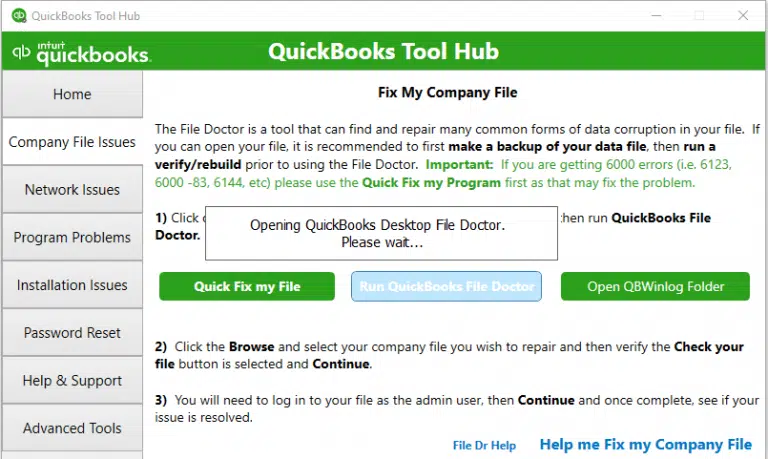
Method 10: Run the QuickBooks File Doctor
Clients can resolve this error using the File Doctor feature in QuickBooks. Here are the steps to troubleshoot the QB 0x800701b1 error.
Open the QuickBooks Tool Hub (Download and install it if you have not done so already).
You will have to access the Company File Issues in the left menu bar.
Users then need to click on the Run QuickBooks File Doctor option. You need to wait a while for it to open.
Note: You will have to search for the QuickBooks Desktop File Doc in the search bar if the QuickBooks File Doctor doesn’t open. Users will need to open it manually.
You will then have to choose the company file from the drop-down menu. Users will need to click on Browse and Search to find the COmpany file if you do not see one.
Users will then have to select the Check your file option.
Click on the Continue option after that.
You then need to type the QuickBooks admin password to allow access.
Click on the Next option at the end.
Method 11: Copy the QuickBooks Company File to a Local Drive
This way reduces reliance on removable media. This approach will also allow you to check if the problem is being caused by the storage device or by the QB software program itself. Rather than opening the company file from an external source:
Copy the QBW file.
Paste it into a folder on the local hard drive.
Open QuickBooks.
Browse to the new location.
Open the copied company file.
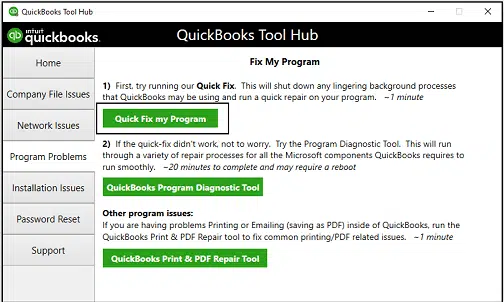
Method 12: Execute the QuickBooks Tool Hub Quick Fix my Program
This tool allows users to troubleshoot various QuickBooks errors. You can fix this connectivity error using the Quick Fix my Program utility if the problem exists in the QB itself. Check the applicable steps below.
Users then need to choose Program Problems from the left menu bar.
You will then have to click on the Quick Fix my Program option.
Wait for some time for the process to finish. You will then need to open the application to see if the problem still remains.
What are the symptoms of QuickBooks Error 0x800701b1?
You can diagnose that there may be a connectivity issue with the drive or hosting network of the QuickBooks file if you know the early signs. It will help you take advanced measures.
The QuickBooks application hangs while accessing files.
Backup procedures fail.
Files saved in the company on external drives cannot be accessed.
File transfers get interrupted midway through.
Windows fails to recognize the storage drive.
Slow response while accessing company data.
Unexpected crashes during restore operations.
How to ensure that the File Path Exists in the First Place?
Customers will first need to ensure that the “QuickBooks cannot access company file 0x800701b1 error” exists due to a wrong path. You can confirm it when you check the file path for accuracy. Check the process to confirm this condition under different conditions hereunder.
In case you are backing up or restoring to an external drive
You need to disconnect the USB drive.
Users need to plug it back in directly to their PC. You need to avoid USB hubs.
Customers should try a different USB port. It must be done to preferably a port on the back of a desktop.
Clients need to open the File Explorer utility.
Confirm the drive shows up and you can open it. You also need to create a test folder to check it is working correctly.
QuickBooks will not be able to see the drive if Windows cannot reliably see the drive.
In Case you use a network share path
Clients need to confirm that they can reach the share outside QuickBooks:
Click the Windows + R button.
Enter the path name like: \ServerName\Share\QuickBooks
You will then have to press the Enter button.
You need to confirm then that the folder opens. Make sure that you can see the company file.
In case you use a mapped network drive (like Q: or Z:)
Users should open the File Explorer.
After that, select the “This PC” option.
You then need to check whether the mapped drive appears disconnected, prompts for credentials, or opens slowly.
If it is disconnected: Right-click the mapped drive.
Press Disconnect
You will then have to remap it again (or use a UNC path, shared above).
If it fails, however, it certainly does not imply that it is because of the problem with QuickBooks itself. Instead, it may arise due to network name resolution or permission issues.
Conclusion!
QuickBooks Error 0x800701b1 is primarily a Windows storage-access issue that prevents QuickBooks from reading or writing company files. By following a structured troubleshooting approach, starting with checking hardware connections, moving files to a local drive, updating drivers, verifying permissions, and using QuickBooks diagnostic tools, you can usually resolve the issue without compromising your financial data. We have explained all the detailed steps to resolve this error for the comfort of users.
In case you still encounter the issue after going through the steps above, seek assistance from an experienced IT professional or QuickBooks technical support team. For instant help to resolve your issue, get in touch with the professionals of the Data Service Team at +1(888)-718-7888.
Frequently Asked Questions (FAQ’s)
Yes! A faulty external hard drive causes this error. This connectivity error can also occur due to a faulty USB port or insufficient power, but the damaged external hard drive is the main cause in most cases.
It only appears when opening QuickBooks because the company file is saved on a disconnected or failing external hard drive (or network drive). QuickBooks is trying to read that specific file path at the beginning. But Windows cannot find the storage device.
The damaged QB company file does not directly cause this error. It is actually a Windows System error. This points to a hardware or connection issue.
You will have to establish a stable connection for the recovery. You can use the QB in-built recovery tools to repair it. Users will also have to take the help of the Verify and Rebuild Data option for a safe recovery.
You can test the path in the File Explorer to verify it. Users can also remap network drives to find whether the path exists. Other options are to check Disk Management as well as verify the USB connections.
About The Author
Steven Moody is a bookkeeping and payroll specialist dedicated to helping businesses maintain accurate financial records and efficient payroll operations. His expertise includes payroll management, tax compliance, bookkeeping solutions, and financial reporting. Steven regularly shares insights on accounting best practices and business finance strategies. Outside of work, he enjoys traveling, exploring new places, and keeping up with the latest developments in business technology.