QuickBooks-Requires-That-You-Reboot

Are you stuck in the “QuickBooks Requires That You Reboot” loop error? If so, no worries. This re you stuck in the QuickBooks Requires That You Reboot loop error? If so, no worries. This issue cause delays and do not allow to access the important financial data. Users of the bookkeeping program receive a message: QuickBooks requires a reboot on your computer to complete the installation process. This error can be caused due to damaged installation files, outdated software, and other issues. It prevents users from accessing the company files.

All you need to do is learn the causes, symptoms, and solutions to fix the QuickBooks Requires That You Reboot. This information is available on this blog page, so read it till the end.

What is the QuickBooks Requires That You Reboot Loop Error?

This error means a technical glitch where QuickBooks Desktop displays a pop-up and prompts you to restart the computer. It traps you in an endless cycle after multiple reboots. QuickBooks Reboot Loop Error occurs due to an interrupted software update, a corrupted program installation, or a conflict with Windows system components.
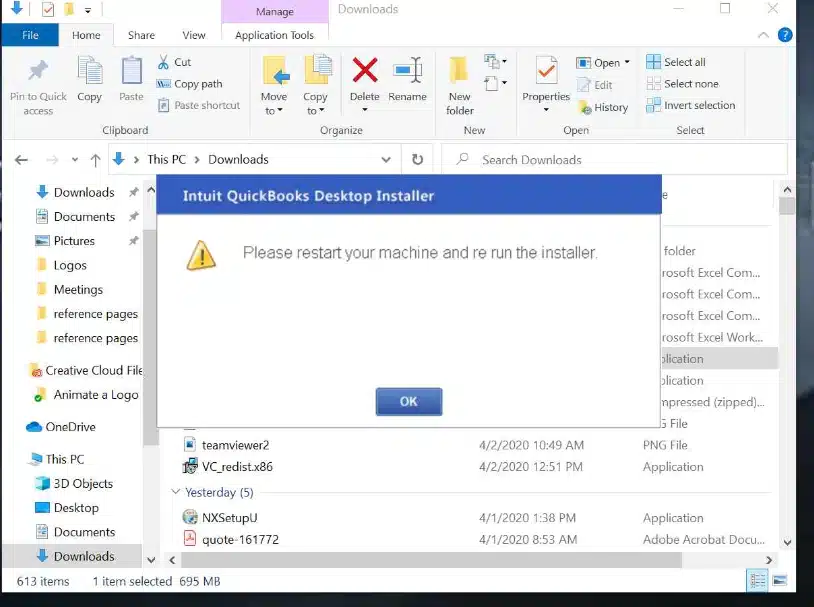
QuickBooks Requires That You Reboot

It does not let QuickBooks verify its own startup sequence. It continues to require a reboot because the software fails to recognize that the system has been restarted. This locks users out of their critical accounting data until underlying file permissions, installation errors, or background application conflicts are fixed using tools like the QuickBooks Tool Hub.

What Causes the QuickBooks Reboot Loop Error?

This error happens when the software asks you to restart the computer to finish an update. But the prompt returns endlessly after every reboot. QuickBooks Requires That You Reboot Loop error is caused by stuck registry flags or damaged system files. The common causes of the Reboot Loop are:

  • Windows keeps a registry indicating that a restart is required. It causes QuickBooks to be stuck in that pending state.
  • Damaged QuickBooks program files hinder the completion of updates.
  • Problems with the Microsoft .NET Framework, MSXML, or Visual C++ packages can prevent the installer from functioning correctly.
  • If the program is not run with full administrator privileges, QuickBooks may be unable to make changes to system folders.
  • Active antivirus may obstruct essential installer files from replacing older versions.
  • An unexpected power loss during a download can result in files being only partially updated.

Data Service Team Tip: You can fix the QuickBooks requires that you reboot loop error with easy and feasible solutions by using the Install Diagnostic Tool, Windows Repair Tool & more. Call us now at +1(888)-718-7888 for more.

How Can You Identify QuickBooks Requires That You Reboot Error?

This error happens when your computer gets stuck restarting over and over again while trying to open the program. You must be aware of common signs associated with the QuickBooks Requires Reboot to Complete Installation error:

  • Your computer turns itself off the moment you open QuickBooks.
  • Pop-up windows show specific codes like C = = = before the crash.
  • The QuickBooks loading screen freezes and then the whole system shuts down.
  • A sudden blue screen with a stop code appears during startup.
  • The main Windows desktop flashes when QuickBooks tries to start.
  • The computer uses 100% of its CPU right before the reboot happens.
  • The system keeps restarting even if you try to run QuickBooks in clean boot mode.
  • You cannot access the accounting data because the system cuts power too fast.

How to Fix the QuickBooks Requires That You Reboot? (Step-By-Step Solutions)

Here, we will discuss the proven and easy methods to resolve QuickBooks update reboot loop error. These are:

Method 1: Switch to Selective Startup

Eliminate unwanted interference, such as third-party applications, as they may disrupt QuickBooks updates through selective startup:
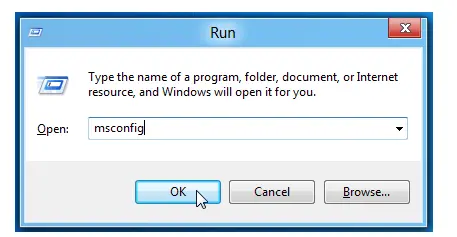
  • Hold Windows + R to open the Run command.
  • Type msconfig and hit OK.
Msconfig
  • Select Selective startup and check Load system services in the General section.
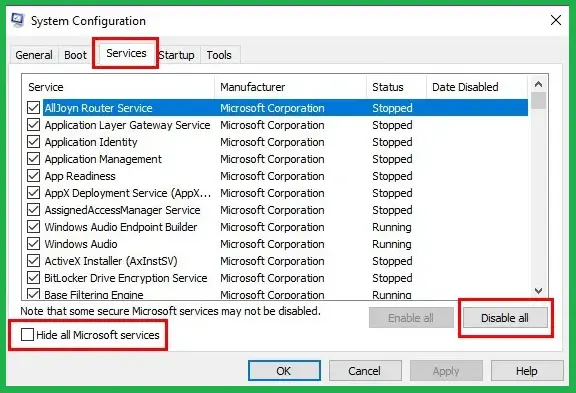
  • Navigate to the Services tab, click Hide all Microsoft Services, and then select Disable all.
Hide all Microsoft Services
  • Uncheck the box for Hide all Microsoft services.
  • Check the box for Windows Installer in the list of services. If it is not checked, mark it and then click ‘OK.’
  • Click Restart in the System Configuration window.
  • Attempt to install QuickBooks again.

Once you have completed the QuickBooks installation, be sure to revert to Normal startup mode.

Here is the process:
  • Press the keyboard combination Windows+R to launch the Run dialog.
  • Type msconfig and select OK.
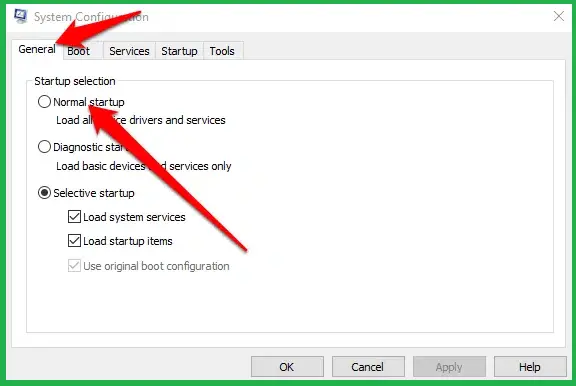
  • Select Normal startup in the General tab and click OK.
Normal-startup
  • Click Restart in the System Configuration window.

Method 2: Run the Quick Fix My Program Feature in the QuickBooks Tool Hub

  • First, you must ensure that QuickBooks is closed before starting the process.
  • Install the updated edition of QuickBooks Tool Hub.
  • Save the file to a location for easy access.
  • Double-click on the downloaded file to open it.
  • Follow the prompts to complete the installation and agree to the terms.
  • Double-click the Tool Hub icon on Windows Desktop to open it once the installation is complete.
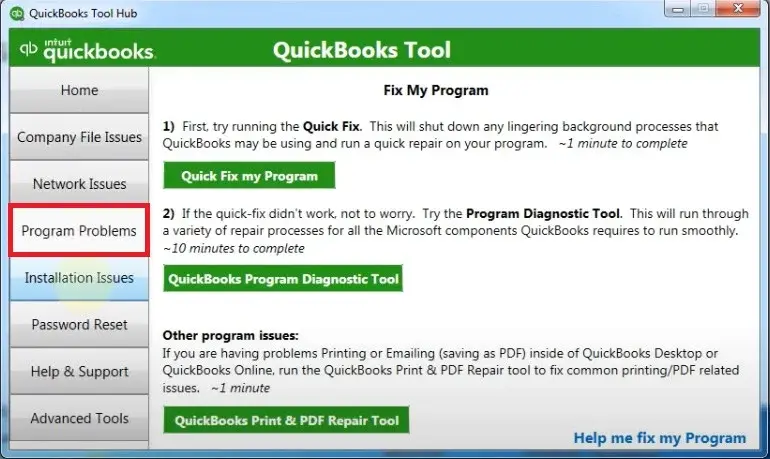
  • Choose the Program Problems tab once you have opened the Tool Hub.
quickbooks-program-problems
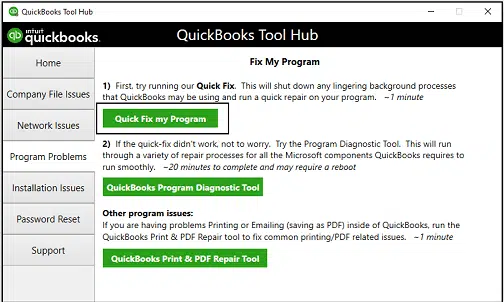
  • Click on the Quick Fix My Program option.
Run-Quick-Fix-My-Program
  • Launch QuickBooks Desktop and open the data file.
  • Lastly, reboot your computer.

Method 3: Create a New Windows Admin User

Issues with user profile corruption may hinder the proper launch of QuickBooks and lead to the QuickBooks Requires That You Reboot Loop issue. You must set up a new admin user to fix this problem.

  • Access the Control Panel and move to User Accounts.
  • Select Manage another account.
  • Opt for the option to Add a new user in PC settings.
  • Go to Add Someone Else to this PC and select I don’t have this person’s sign-in information.
  • Click on the option for Add a user without a Microsoft account.
  • Enter the username, password and click Next.
  • Grant it Administrator privileges and reboot the computer after the new account has been established.
  • Sign in using the new admin account and attempt to open QuickBooks.

Method 4: Configure the Firewall Setup

Perform firewall configuration for QuickBooks to ensure that your settings won’t be restricted:

Set up Firewall Port Exceptions for QuickBooks.

  • Navigate to the Start menu in Windows, select search box and type Windows Firewall to obtain it.
  • Click on Advanced Settings option, right-click on Inbound Rules, and select New Rule.
  • Choose Port and click Next.
  • Ensure TCP is selected in the advanced settings for Windows Firewall.
  • Enter the specific QuickBooks ports for your version in the ‘Specific local ports‘ section.
  • After inputting the port number, click Next, select ‘Allow the Connection,’ and then click Next again.
  • Select all profiles and click Next when prompted.
  • Create a rule and give it a name. Click Finish once completed.
  • Repeat the above steps for outbound rules.

Method 5: Reinstall Microsoft Visual C++ Redistributable Package

A damaged Microsoft Visual C++ Redistributable package can be the cause of the QuickBooks Requires That You Reboot Error, so it needs to be reinstalled to fix this issue:

  • Select the most recent Microsoft Visual C++ Redistributable from official sources.
  • Click on the appropriate file (32-bit, 64-bit, ARM64).
  • The process to install and import the company from QuickBooks 2019 after running VC_redist.x64 will take approximately 30 minutes.

Let’s examine the installation process. For individuals who have set up QuickBooks Desktop using a CD:

  • Insert the QuickBooks CD into CD drive.
  • Close it if the QuickBooks installation window appears.
  • Hold the Windows+E keys to open the Computer Window.
  • Move to D:\ThirdParty\CRT9 or D:\ThirdParty\CRT8. Remember that D represents your CD drive letter.
  • Double-click vcredist_x86.exe and follow the on-screen instructions to install the software.

If you do not have a QuickBooks Desktop CD, download and install Microsoft Visual C++ from the Microsoft website. Select the suitable version:

  • Microsoft Visual C ++ 2013 Redistributable Package (choose ‘vcredist_x86.exe’)
  • Microsoft Visual C ++ 2008 Redistributable Package
  • Microsoft Visual C ++ 2005 Redistributable Package

Method 6: Repair QuickBooks

You must repair the program to fix damaged installation components before you install QuickBooks Desktop again:

  • Navigate to the Add/Remove Programs section.
  • Move to QuickBooks and select the Change option.
  • Select the Repair option.
  • Allow it to complete the repair and restart the computer again.
  • Launch QuickBooks again after the reboot procedure is done.

Method 7: Delete Intuit File as Admin

If the repair does not resolve the problem, use the QuickBooks Clean Install Tool to remove the existing QuickBooks installation and its associated files before reinstalling the program.

  • Access the Windows Start menu and select Control Panel.
  • Navigate to Programs and Features.
  • Uninstall all programs labeled as Microsoft Visual C++….
  • Look for the hidden ProgramData folder.
  • Delete the Intuit folder.
  • Go to the Program Files (x86) directory.
  • Remove the Intuit folder.
  • Find the hidden AppData folder in your user directory and open the Local subfolder.
  • Delete the Intuit folder and restart your computer.
  • Log in through the local administrator account and then reinstall QuickBooks.

If you still can’t install QuickBooks Desktop, check for remaining installation files, Windows permissions, or conflicts with security software before trying the installation again.

Method 8: Check QuickBooks Installation and Security Permissions

Damaged installation files can lead to problems such as QuickBooks Requires That you Reboot to Complete Installation problem. So modify security permissions to fix this issue.
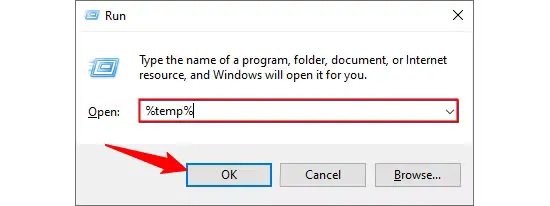
  • Press the Windows key, type %temp%, and hit Enter to access the TEMP folder.
Temp-in-run-box
  • Right-click on the folder and choose Properties.
  • Select Security tab and then hit Edit option.
  • Select your Windows username and check Full Control under Allow.
  • Click OK twice to implement the changes.

Method 9: Suppress QuickBooks Desktop Startup

This method can help bypass QuickBooks Requires That You Reboot Loop issues and cause the software to enter a reboot loop:

  • Right-click the QuickBooks Desktop icon.
  • Double-click the icon to open QuickBooks and hold the Ctrl key.
  • Hold Ctrl until the No Company Open screen appears.
  • Release the Key.
  • Once QuickBooks opens, access the company file to check if the issue is resolved. If QuickBooks won’t open, continue with additional troubleshooting steps to identify whether the problem is related to the program installation or company file.

Method 10: Use Company File from a Different Location

Relocating the company file can help determine whether its current location is causing access problems. If you encounter a QuickBooks Company File Not Found issue, moving a copy of the file to a different folder can help identify whether the original location is causing the problem.

  • Press Windows + E to open Windows Explorer, locate the .QBW file.
  • Right-click the file and choose Copy.
  • Move to C: drive, create a new folder (QBTest), and paste the copied file there.
  • Open QuickBooks and hold down the Ctrl key.
  • Choose the copied company file from any new location and check if QuickBooks Requires That You Reboot Loop is resolve. If QuickBooks still cannot communicate with the company file, check the file location, network connection, and permissions.

Method 11: Use QuickBooks Install Diagnostic Tool to Fix Installation Issues

Stuck in the QuickBooks Requires That You Reboot loop? Run the Install Diagnostic Tool and log in as admin to fix the issue quickly. To do this, follow the steps below:
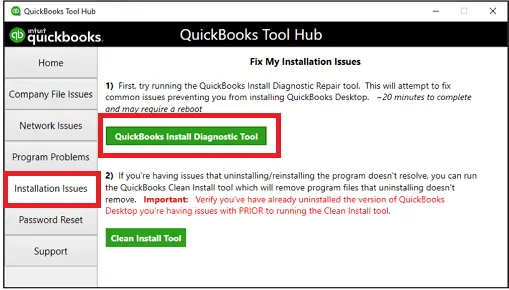
QuickBooks install diagnostic tool
  • Open QuickBooks Tool Hub and navigate to the Installation Issues tab.
  • Choose QuickBooks Install Diagnostic Tool.
  • Allow this tool to scan the system for installation issues and fix any detected issues.
  • This may take some time.
  • Once the scan procedure is complete, restart computer and check if the reboot loop issue is resolved.

Prerequisites to Resolve QuickBooks Requires That You Reboot Loop

You must first prepare yourself to fix this error effortlessly and ensure you meet the given pointers:

  • Log in to Windows using a local administrator account to ensure full permission to change system files and registry keys.
  • Create an external backup copy of the company file and run advanced repair tools.
  • Verify and enable Microsoft .NET Framework 3.5 and 4.x features through the Windows Control Panel.
  • You must have a native Windows app like WordPad to use for the pending-flag cancellation trick.
  • Download and install the latest utility package from Intuit to access automated diagnostic and repair modules.
  • Temporarily pause third-party antivirus protection, as it might block registry updates when resolving QuickBooks Requires That You Reboot Loop problem.
  • Confirm full user control and read/write permissions for the Windows local TEMP folders.
  • Shut down all running instances of Intuit and QuickBooks processes through the Windows Task Manager.

Tips to Avoid QuickBooks Requires That You Reboot Loop in Future

Do you wish to avoid facing this error again in future? It is possible by considering the tips below, which help you prevent the QuickBooks Requires Reboot to Complete Installation error:

  • Open QuickBooks with full permissions to prevent file access blocks. It trigger QuickBooks Requires to Reboot to Complete Installation problem.
  • Install the latest Windows security patches to avoid operating system conflicts with QuickBooks components.
  • Apply official updates and maintenance releases promptly. If QuickBooks Update Stuck occurs during the process, resolve the update problem before restarting or reinstalling the program.
  • Close stuck QuickBooks background processes in the Task Manager and then shut down your PC.
  • Keep your Microsoft .NET Framework repaired and fully updated since QuickBooks relies on it to run.
  • Run the built-in QuickBooks File Doctor tool to repair minor data damage and then worsens it.
  • Add QuickBooks folders to the antivirus exclusion list so security scans do not block core startup files.
  • Shut down your computer completely rather than using hybrid sleep mode to ensure a fresh system state.

Conclusion!

As we discussed above, QuickBooks Requires That You Reboot Loop is an error that occurs during installation process. But you need to learn the potential causes and solutions to resolve the issue. The above-outlined steps can mitigate the problem and restore functionality, whether you need to clear temporary files, ensure your system meets QuickBooks’ requirements, or reinstall the software. Remember, regular maintenance and updates can prevent common issues and keep the accounting processes running smoothly.

If you face the QuickBooks Requires That You Reboot to Complete Installation issue consistently, reach out to Data Service Team experts at +1(888)-718-7888. Do not forget that we are available round the clock to guide you.

Frequently Asked Questions (FAQ’s)

This happens due to a pending update flag. It is caused by interrupted updates, blocked background permissions, corrupted software components, etc. The program fails to clear the requirements flag and gets stuck in an endless loop even after restarting.

The QuickBooks reboot loop is more of a QuickBooks installation and update conflict than a pure Windows failure. However, it happens at the intersection of both. It occurs when the QuickBooks installation tries to change a core system file but fails to verify completion. It causes the software to demand a system restart that never clears the installation flag.

Yes! Outdated Windows updates can trigger the QuickBooks reboot loop. QuickBooks relies on underlying Microsoft components like the .NET Framework and C++ Redistributables. The QB installer fails to register the necessary system files that have been updated. It traps the software in an endless cycle of requesting restarts.

Download and run the QuickBooks Tool Hub to repair the .NET Framework for QuickBooks. Open the Installation Issues tab and select the QuickBooks Install Diagnostic Tool. Reinstall .NET Framework through Windows features in the Control Panel if the error persists.

No! You will not lose the company file. The QuickBooks reboot loop is an installation glitch tied to program and system files, not financial data. The company file is stored separately and means standard troubleshooting Clear pending reboot flags is one of them.

Yes! You should always back up your QuickBooks company file before troubleshooting. Rebuild data, fix errors, or update software can alter financial data if something goes wrong. A recent backup gives you a safe restore point to protect the financial records and prevent permanent data loss.

Windows 11 experiences reboot loops more frequently than Windows 10 due to complex hardware requirements and frequent cumulative update conflicts. Whereas the more mature Windows 10 benefits from years of stability polish and broader driver compatibility.

This message appears because a pending file rename operation in Windows fails to clear after the install. This happens when background processes, restricted user permissions, or locked folders block the installer and do not allow to complete the configuration keys. This makes the program think the required Restart never happened.

QuickBooks may struggle to launch after a restart of Windows because of a lingering background process, an issue with the QBWUSER.ini file, interference from active services, etc. Use the QuickBooks Tool Hub to resolve this issue.

About The Author

Steven Moody

Steven Moody is a bookkeeping and payroll specialist dedicated to helping businesses maintain accurate financial records and efficient payroll operations. His expertise includes payroll management, tax compliance, bookkeeping solutions, and financial reporting. Steven regularly shares insights on accounting best practices and business finance strategies. Outside of work, he enjoys traveling, exploring new places, and keeping up with the latest developments in business technology.

Steven Moody

QuickBooks Error

QuickBooks Error 7149: How to Fix Crashing or Not Opening

Read More
QuickBooks Error

QuickBooks Error 15240: Why It Happens and How to Fix It

Read More
QuickBooks Error

QuickBooks Fatal Error: Why It Happens and How to Fix It

Read More
QuickBooks

Download QuickBooks Desktop: Everything You Need to Know

Read More
QuickBooks

QuickBooks Online New Features & Updates in 2026: What to Know

Read More